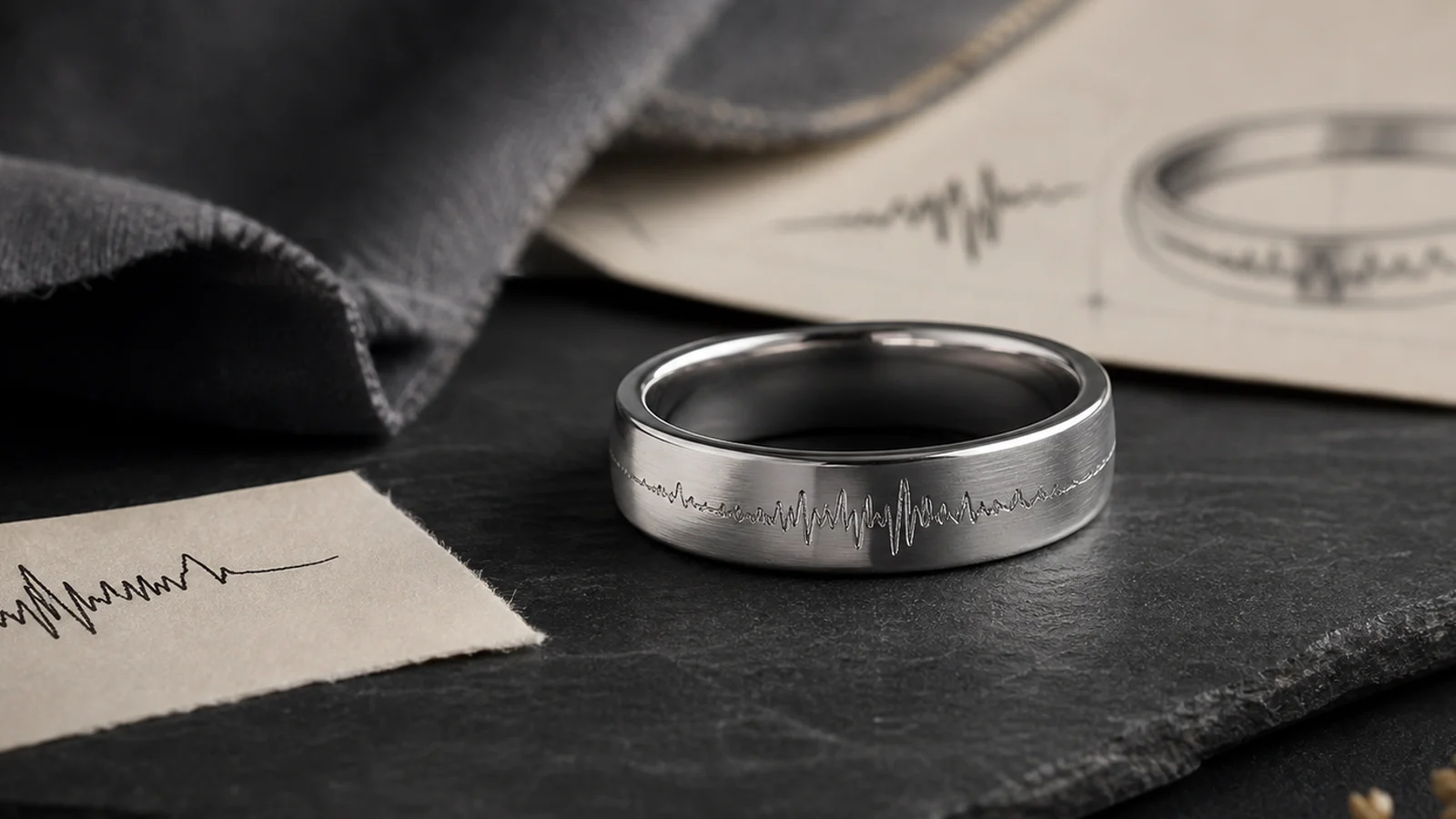
Photo engraved rings start with a hard truth: the photo is not being printed on a flat page. It has to become readable artwork on a curved band, so the clearest subject matters more than the most emotional picture.
Choose a photo with one main subject and a calm background. A face, dog profile, truck, boat, house, flower, work tool, or favorite place can all work if the outline remains recognizable after simplification.
Avoid group photos unless one person can be cropped cleanly. A crowded family picture may be precious, but it often turns into tiny marks once it has to fit ring scale.
Silhouette treatment is usually the safest path. Instead of trying to engrave every facial detail, simplify the subject into hair shape, posture, pet ears, vehicle outline, roofline, or another feature the wearer would recognize.
If the photo carries a memorial meaning, decide whether the name or phrase should stay inside the ring. Let the outside show the photo-derived shape while the inside holds the private words.
Strong contrast helps. Photos with clear light and dark edges are easier to translate than soft, shadowy, filtered, or heavily compressed images.
Send the original photo when possible, plus a note about what matters in it. If the old porch matters more than the whole house, or the dog's ears matter more than the collar, say that before artwork begins.
Do not ask one ring to hold a portrait, a full landscape, a long phrase, a date, and several symbols. Pick the photo as the lead, then use one support detail to anchor the story.
A good test is whether someone who knows the subject could recognize the simplified outline without reading the caption. If not, choose a cleaner photo or a different source detail.
Bring the original photo, preferred crop, exact name or date, inside wording choice, and one note about what must remain recognizable into the Friends of Irony designer.