A coordinates engraved ring should feel like a place, not just a string of numbers. Before choosing format or font, name the location in plain language: the dock, the old house, the chapel, the trailhead, the ranch gate, the proposal spot, or the street where everything started.
Coordinates can mark a wedding, proposal, hometown, military base, lake house, hunting land, first apartment, cemetery, or family farm. The ring becomes stronger when the numbers point to one memory instead of trying to stand for every place in a life.
Keep the coordinate format short enough to read. Full decimal coordinates can be precise, but they may feel cramped; degrees and minutes or a shortened decimal can be better if exactness is not legally important.
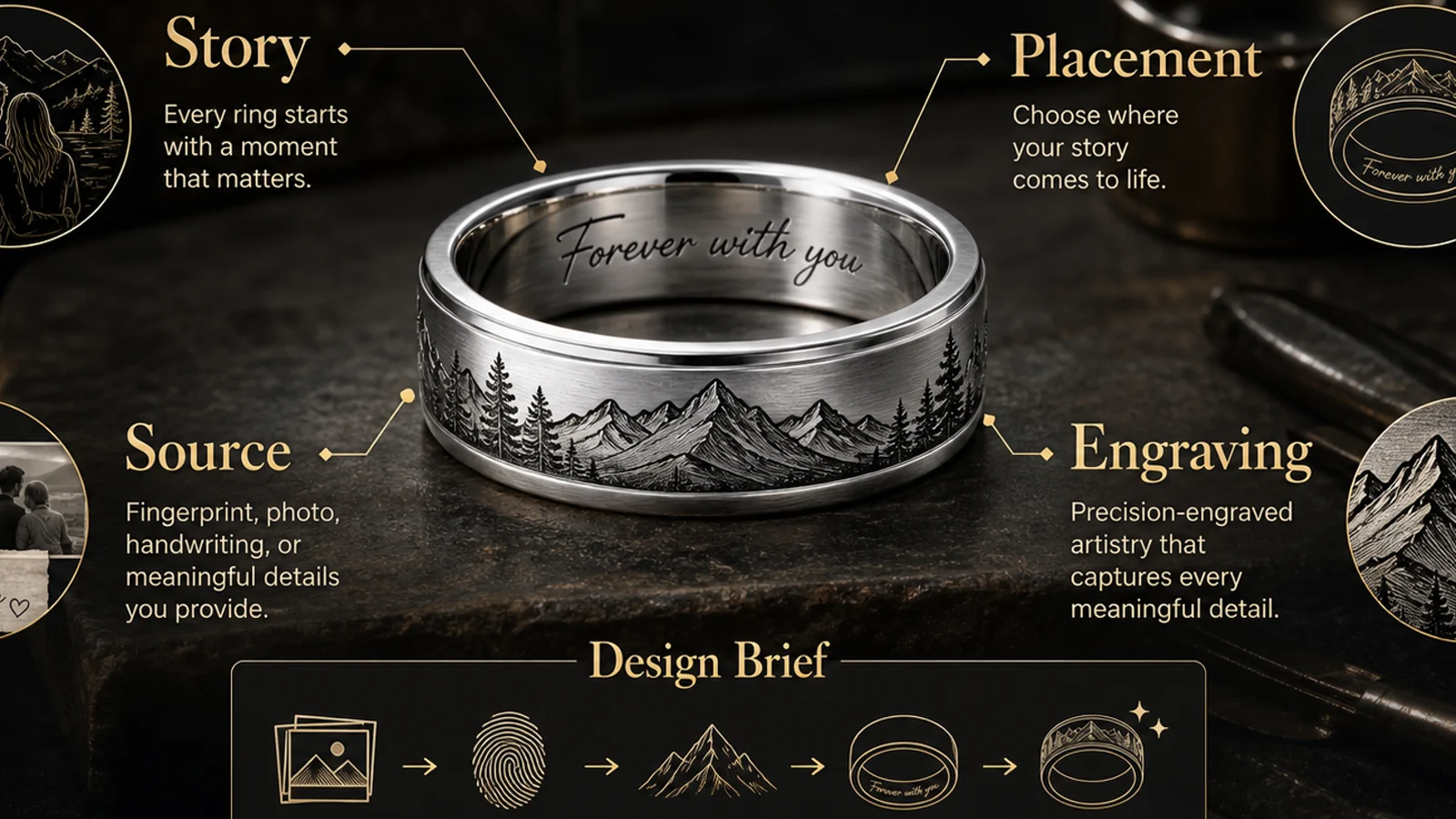
Add one place symbol only if it clarifies the memory. A shoreline, mountain line, tiny house, star, cross, tree, road, or compass mark can help, but too many map elements make the band feel busy.
Decide whether the coordinates should be public. Visible outside coordinates can invite questions, while inside coordinates make the place private and close.
For wedding and anniversary rings, pair coordinates with a date or initials only if all three remain readable. Often the cleanest version is coordinates outside and a date inside.
For memorial rings, ask whether the place is comforting or painful to see. A cemetery coordinate, hospital location, or accident site may belong inside, while home or family land can work outside.
Verify the exact coordinate source before ordering. Map apps can drop a pin in slightly different places, so confirm the entrance, building, shore, field, or room-facing spot that matters.
The ring is ready when the coordinate line would still make sense years from now, even if the wearer no longer tells the whole story every time.
Bring the place name, verified coordinate format, one optional place symbol, date or initials choice, and privacy preference into the Friends of Irony designer.